January 8, 2026
Why You Pick Up Your Phone 150 Times a Day
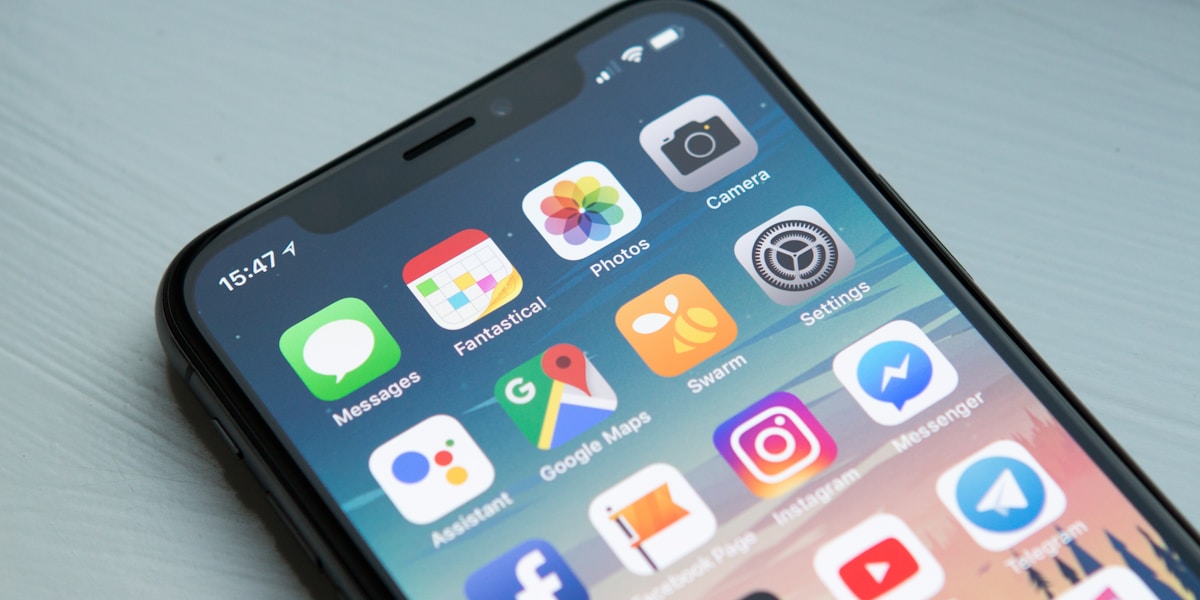
The average person picks up their phone around 150 times per day. (That oft-quoted figure traces back to a 2013 industry report, and more recent estimates land anywhere from roughly 100 to 150 — the exact number shifts, the order of magnitude doesn't.) If you're awake for 16 hours, that's roughly once every 6 minutes.
Think about that. Every 6 minutes, something in your brain says "check the phone." Not because anything happened. Not because you're expecting something important. Just... check.
This isn't a habit. This is a compulsion.
The Slot Machine in Your Pocket
Your phone is designed using the same psychological principles as slot machines. This isn't hyperbole—it's well-documented in cognitive research. The same variable reward mechanisms that keep gamblers pulling the lever keep you pulling down to refresh.
Sometimes there's a new like. Sometimes a message. Sometimes nothing. The unpredictability is the point. Your brain releases dopamine in your brain's reward circuit not when you get the reward, but in anticipation of possibly getting it.
That's why you check even when you know nothing is there. Your brain wants to pull the lever, just in case.
This is not a design accident. The engineers and psychologists building these platforms understand this mechanism thoroughly. Variable reward schedules — the exact pattern used by slot machines — produce more persistent behavior than consistent rewards. A machine that paid out every single time would be less addictive than one that pays unpredictably. Your phone is built to be the latter. Every check is a pull of the lever, and the occasional payoff keeps you coming back for the 149 checks that yield nothing.
The Phantom Vibration
Have you ever felt your phone vibrate, checked it, and found nothing? Studies show up to 90% of people experience "phantom vibrations." Your brain is so primed to respond to your phone that it's hallucinating notifications.
Your nervous system has been rewired. The device has become an extension of your body, and your body is constantly scanning for its signals.
Phantom vibrations are more than a quirky party fact. They're evidence of how deeply the phone has been integrated into your attentional system. Your brain allocates monitoring resources to your phone the same way it monitors your environment for threats — automatically, constantly, without requiring conscious direction. You can't turn it off because it's not under conscious control anymore. The device has hijacked the background processing that was supposed to be watching for actual dangers.
What Triggers the Reach?
Pay attention to the moments before you pick up your phone. You'll notice patterns:
- Micro-boredom: Any gap in stimulation, even 30 seconds waiting for something
- Task resistance: The moment a task gets slightly difficult or uncomfortable
- Emotional discomfort: Anxiety, loneliness, frustration—any feeling you'd rather not feel
- Social uncertainty: After posting something, after sending a message, after any social interaction
The phone has become your escape hatch from any moment that isn't perfectly comfortable.
What's important to notice is that the trigger isn't boredom in the abstract — it's the emotional response to boredom, which is discomfort. Your brain has learned that the phone resolves that discomfort immediately. So now the threshold for discomfort that triggers a phone check is vanishingly small. Thirty seconds of waiting. Two minutes at a red light. The brief pause before a task begins. Any gap, however brief, is now a trigger.
The Cost of Each Interruption
Here's what 150 phone pickups actually costs you:
Even if each check is "just" 2 minutes, that's 5 hours of fragmented attention daily. But it's worse than that, because each interruption costs you more than just those 2 minutes.
Research on how the Internet reshapes cognition shows it takes an average of 23 minutes to fully regain focus after a distraction. You're not losing 5 hours. You're losing your entire capacity for deep work, deep thought, deep anything.
You're living life in 6-minute increments, and wondering why you can't focus, can't finish projects, can't feel satisfied with real life.
Think about what requires more than 6 minutes of uninterrupted thought. Almost everything important. A complex work problem. A difficult conversation you're preparing for. A creative project. A plan for your life. A book worth reading. Every 6 minutes, you're interrupting whatever was building in your mind and replacing it with a feed check that delivers nothing of value. The attention rebuilds, gets interrupted again, rebuilds, gets interrupted again. Nothing complex can form. Nothing substantial gets produced. You end the day with a vague sense that nothing got done, and you're right.
The 150-Check Life
150 phone pickups a day is not a neutral behavior. It's a description of a life organized around the phone's demands rather than your own. It means you have surrendered your attention — the most precious cognitive resource you have — to a device that will use it however its algorithm sees fit.
The men who achieve significant things in their lives are not checking their phones every 6 minutes. They're building stretches of uninterrupted focus long enough for complex work to happen. An hour of deep, uninterrupted concentration produces more than three hours of fragmented, distracted effort. The math is real. The results are real. And the difference between those two modes of work is, in large part, a question of what you do with your phone.
What 150 Checks Does to Your Relationships
The damage of compulsive phone checking extends beyond productivity. Think about what 150 checks per day means for the people in your life. When you're with a friend, a partner, a family member — how often is the phone interrupting? How often do you half-listen to what someone is saying while your attention drifts to the device? How often does someone watch you check your phone mid-conversation and decide, consciously or not, that you're not fully present?
People notice. They may not say anything, but they notice. Over time, the people who matter to you adapt to your divided attention by giving you less of theirs. Conversations stay shallow because they've learned that you'll check out before anything goes deep. Invitations stop coming because your presence, when you do show up, isn't really presence at all — it's a body in a room with a mind in a phone.
The loneliness that so many men report — the sense of having acquaintances but no close friends, of being surrounded by people but not genuinely known — is partially a consequence of this. You can't build deep connection in six-minute increments. The phone is in the way, not just of your work, but of the relationships that make life worth building in the first place.
The First Step
Before you can change this pattern, you have to see it clearly. Most people have no idea how often they check their phone because the behavior is unconscious.
Try this: for one day, make a tally mark every time you pick up your phone. Don't try to change anything. Just count.
The number will disturb you. That's the point.
After you have the data, look at the patterns. When are the checks clustered? What was happening in the minute before each one? You'll start to see the triggers — the specific moments of discomfort or micro-boredom that reliably send your hand to your pocket. That map of triggers is where behavioral change actually starts: not in willpower, but in understanding the specific cues that have been trained into your automatic behavior, and deliberately inserting a pause between the cue and the response.
Breaking the 150-Check Cycle
The goal isn't to get to zero phone pickups per day. Your phone is a tool and legitimate use is fine. The goal is to get the unconscious, compulsive checks under control — the ones that happen before you've decided to pick it up, the ones driven by discomfort rather than intention.
A few things that work better than willpower: Create physical distance between yourself and the phone during focused work. The research is clear that even having your phone visible on the desk — even face-down — reduces cognitive performance. Out of sight genuinely means out of mind to a meaningful degree. If your phone isn't within arm's reach, you can't pick it up without making a deliberate choice, and that deliberateness breaks the automatic cycle.
Turn off non-essential notifications. Every notification is a trained cue to pick up the phone. Most of them are engineered to feel urgent when they're not. When the phone stops calling for your attention dozens of times per day, the 150-check compulsion gradually weakens. The cue is removed, so the automatic behavior has nothing to latch onto.
Perhaps most importantly: build a life where the gap between phone checks is filled by something that matters to you. Men who are genuinely engaged in their work, their training, their relationships, their creative projects don't compulsively check their phones every six minutes. Not because they have more discipline, but because they're actually doing something that holds their attention. The phone compulsion is loudest when life feels empty. Fill the life, and the compulsion quiets.
Awareness precedes change. You can't fight an enemy you can't see.